IT is a cruel and poignant certainty that the children who died in the wreckage of
their school during the earthquake this week in Dujiangyan, China, knew all too well
that their country once led the world in the knowledge of the planet’s seismicity.
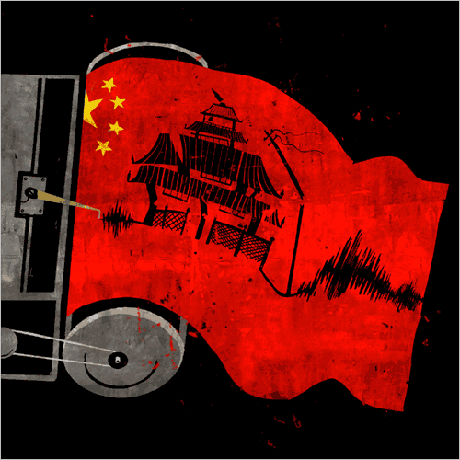
They would have been taught, and proudly, that almost 2,000 years ago an
astronomer named Chang Heng invented the world’s first seismoscope. It was a
bizarrely imagined creation, with its centerpiece a large bronze vessel surrounded
by eight dragons, each holding a sphere in its mouth.
A complex system of internal levers ensured that if an earthquake ever disturbed the
vessel, a ball would drop from a dragon’s care into the mouth of a bronze frog
positioned underneath. By observing which dragon had dropped its ball, Chang
Heng could ascertain the location of the quake. And always, as the emperor for
whom Chang Heng fashioned the device noted, the earthquakes came from the
mountains in the west, where Dujiangyan lies.
As we watch with mounting melancholy the devastation from Sichuan, a question
lingers, and troublingly. Why, if the Chinese had come to know so much about
earthquakes so early on in their immensely long history, were they never able to
minimize the effects of the world’s contortions — to at least the degree that America
has? Why did they leave the West to become leaders in the field, and leave
themselves to become mired, time and again, in the kind of tragic events that we
are witnessing this week?
their school during the earthquake this week in Dujiangyan, China, knew all too well
that their country once led the world in the knowledge of the planet’s seismicity.
They would have been taught, and proudly, that almost 2,000 years ago an
astronomer named Chang Heng invented the world’s first seismoscope. It was a
bizarrely imagined creation, with its centerpiece a large bronze vessel surrounded
by eight dragons, each holding a sphere in its mouth.
A complex system of internal levers ensured that if an earthquake ever disturbed the
vessel, a ball would drop from a dragon’s care into the mouth of a bronze frog
positioned underneath. By observing which dragon had dropped its ball, Chang
Heng could ascertain the location of the quake. And always, as the emperor for
whom Chang Heng fashioned the device noted, the earthquakes came from the
mountains in the west, where Dujiangyan lies.
As we watch with mounting melancholy the devastation from Sichuan, a question
lingers, and troublingly. Why, if the Chinese had come to know so much about
earthquakes so early on in their immensely long history, were they never able to
minimize the effects of the world’s contortions — to at least the degree that America
has? Why did they leave the West to become leaders in the field, and leave
themselves to become mired, time and again, in the kind of tragic events that we
are witnessing this week?
| World of China: Middle Kingdom: 004-006: 2008-05-12 02:28 PM Sichuan Earthquake, China: Historical Tremors 歷史的震動 历史的震动 By Simon Winchester Published: May 15, 2008 |




 | |  | |  | |  | |  | |  | |  |




 |
| |
 |
| |
 |
| |
 |
| |
 |
| |
 |
| |
 |
| |
 |
| |
 |
| |
 |
| |
 |
| |
 |
| |
 |
| |
 |
| |
 |
| |
 |
The question applies to very much more than the science of earthquakes. In almost every area of technology the Chinese were once supreme, without competition. The
stirrup, so hugely important in peace and war, was invented by the Chinese. Printing, gunpowder, the use of the compass — the three inventions that Francis Bacon once
said defined the modern world — are all thought to have been first made in China. So too, many think, were vaccination, toilet paper, segmental arch bridges, iron chains
and perhaps chess — the list seems endless.
And yet, in the 16th century China’s innovative energies inexplicably withered away, and modern science became the virtual monopoly of the West. There had been any
number of Chinese Euclids and Archimedes but there was never to be a Chinese Newton or Galileo. The realm fell steadily behind, century by century; it became
impoverished, backward and prey to the caprices of nature.
There is a peculiar paradox in the Sichuan disaster. Dujiangyan is known across the nation as the site of one of China’s greatest ancient wonders. In 256 B.C. an engineer
named Li Bing, concerned about the catastrophic annual flooding of the Min River, completed a huge water diversion and irrigation scheme. It involved cutting a long trench
through a granite mountainside — achieved by the patient process of burning grass bonfires on top of the rocks and pouring cold water until the granite cracked. It took
decades, but Li Bing’s 2,300-year-old project still stands less than a mile from the town’s ruined school, and it still works.
And yet, did the Chinese continue with their early expertise in flood prevention? Just as with Chang Heng’s seismic mastery, Li Bing’s expertise counted for nothing; year
upon year, thousands of Chinese die in immense inundations in the great rivers that course across the country; some 400 dams sustained damage in this week’s quake.
Historians have long debated why the Chinese so signally failed to exploit their early promise. Lack of internal competition, some suggest. Others blame the long-held
central ambition of every young Chinese man to become a Confucian mandarin, a bureaucrat, rather than an engineer or scientist.
Not a few others, however — admirers of China and optimists in the main — say that in the long sweep of Chinese history, a mere 400 or 500 dark, non-scientific years are
a mere blip, a hiccup, and that China’s innovative energies are now roaring back, with the universities and scientific institutions brimming as they did back in the golden
ages of the great dynasties.
That had better be the case. China, in its headlong attempts to modernize, has often demonstrated a dismayingly cavalier attitude toward the well-being of its people:
skyscrapers are built with little attention to safety standards and are invariably far from earthquake-resistant; huge dams — not least the monstrosity that has so ruined the
Three Gorges of the Yangtze — are erected in a slapdash fashion; subways, like the system burrowing through the waterlogged alluvium beneath Shanghai, are built with
incautious haste; freeway tunnels are bored through earthquake fault zones.
If the country does not occasionally stand back and pause for breath, then its future — at least so far as nature’s occasional moments of seismic madness are concerned
— will continue to be marked by calamity. Until this week Dujiangyan was a place of which China could be proud; today its wreckage stands as a tragic monument to a
culture that turned its back on its remarkable and glittering history.
Simon Winchester is the author of “The Man Who Loved China.”
stirrup, so hugely important in peace and war, was invented by the Chinese. Printing, gunpowder, the use of the compass — the three inventions that Francis Bacon once
said defined the modern world — are all thought to have been first made in China. So too, many think, were vaccination, toilet paper, segmental arch bridges, iron chains
and perhaps chess — the list seems endless.
And yet, in the 16th century China’s innovative energies inexplicably withered away, and modern science became the virtual monopoly of the West. There had been any
number of Chinese Euclids and Archimedes but there was never to be a Chinese Newton or Galileo. The realm fell steadily behind, century by century; it became
impoverished, backward and prey to the caprices of nature.
There is a peculiar paradox in the Sichuan disaster. Dujiangyan is known across the nation as the site of one of China’s greatest ancient wonders. In 256 B.C. an engineer
named Li Bing, concerned about the catastrophic annual flooding of the Min River, completed a huge water diversion and irrigation scheme. It involved cutting a long trench
through a granite mountainside — achieved by the patient process of burning grass bonfires on top of the rocks and pouring cold water until the granite cracked. It took
decades, but Li Bing’s 2,300-year-old project still stands less than a mile from the town’s ruined school, and it still works.
And yet, did the Chinese continue with their early expertise in flood prevention? Just as with Chang Heng’s seismic mastery, Li Bing’s expertise counted for nothing; year
upon year, thousands of Chinese die in immense inundations in the great rivers that course across the country; some 400 dams sustained damage in this week’s quake.
Historians have long debated why the Chinese so signally failed to exploit their early promise. Lack of internal competition, some suggest. Others blame the long-held
central ambition of every young Chinese man to become a Confucian mandarin, a bureaucrat, rather than an engineer or scientist.
Not a few others, however — admirers of China and optimists in the main — say that in the long sweep of Chinese history, a mere 400 or 500 dark, non-scientific years are
a mere blip, a hiccup, and that China’s innovative energies are now roaring back, with the universities and scientific institutions brimming as they did back in the golden
ages of the great dynasties.
That had better be the case. China, in its headlong attempts to modernize, has often demonstrated a dismayingly cavalier attitude toward the well-being of its people:
skyscrapers are built with little attention to safety standards and are invariably far from earthquake-resistant; huge dams — not least the monstrosity that has so ruined the
Three Gorges of the Yangtze — are erected in a slapdash fashion; subways, like the system burrowing through the waterlogged alluvium beneath Shanghai, are built with
incautious haste; freeway tunnels are bored through earthquake fault zones.
If the country does not occasionally stand back and pause for breath, then its future — at least so far as nature’s occasional moments of seismic madness are concerned
— will continue to be marked by calamity. Until this week Dujiangyan was a place of which China could be proud; today its wreckage stands as a tragic monument to a
culture that turned its back on its remarkable and glittering history.
Simon Winchester is the author of “The Man Who Loved China.”
| 歷史的震動 (Chinese Traditional Version) |
| 历史的震动 (Chinese Simplified Version) |
歷史的震動:古代中國人定勝天的創新能量
紐約時報(作者 SIMON WINCHESTER)(原題:歷史的震動)在中國本周的地震中,
都江堰那些死于學校廢墟中的儿童令人痛心,他們的國家曾經在地震活動知識方面領先
世界。
他們應該被驕傲地告知,大約在2000年前,一位叫張衡的天文學家發明了世界上第一個
地震儀。那是一個想象奇特的創造,中央是一個大型青銅器,周圍有八條龍,每一條龍
嘴里都含著一顆珠子。如果感應到地震,其內部复雜的杠杆系統可以确保龍口的珠子落
到下面的青銅蟾蜍口中。通過觀察哪條龍的珠子落下,張衡可以确定地震的方位。而地
震常來自西部的山區,那是都江堰所在的地方。
當我們看到四川悲劇,腦子里縈繞著一個苦惱的問題。既然中國人那么早就知道那么多
關于地震的知識,他們為什么沒能讓世界逆轉的效應盡量最小化——至少達到美國那樣
的程度?為什么他們讓西方成為這個領域的領袖,讓他們自己一次又一次地深陷我們本
周目睹的那种悲劇事件?
這個問題不僅限于地震科學。几乎在所有的技術領域,中國都曾經領先,無与倫比。在
和平和戰爭時期都發揮巨大作用的馬鐙就是中國人發明的。印刷術、火藥、指南針的應
用(培根曾說這是三項定義現代世界的發明)据說最初來自中國。還有接种疫苗、廁
紙、分節拱橋(segmental arch bridges)、鐵鏈、也許還有國際象棋——這份清單似乎長
得看不到頭。
然而,在16世紀,中國的創新能量莫明其妙地萎縮了,現代科學實際上被西方壟斷。曾
經有過中國的歐几里德(Euclids)和阿基米德(Archimedes),但從來沒有中國牛頓和
伽利略。一個世紀接一個世紀,這個領域逐步落后;它變得貧困、落后、被反复無常的
自然折磨。
四川災難中有一個奇特的悖論。都江堰是中國最偉大的古代奇跡之一,聞名全國。在公
元前256年,有一位叫李冰的工程師,他關心岷江每年的洪水災難,完成了一項龐大的
引水和灌溉計划。這項工程耗時數十年,但歷時2300年,它依然屹立,而且仍然在發揮
作用。
然而,中國人有沒有延續他們早期的防洪工作?就和張衡一樣,李冰的專家技術沒有延
續;年复一年,數以千計的中國人死于洪水;本周的地震中大約有400個水壩受損。
歷史學家長期在爭論,為什么中國人沒能利用早期的成就。有人認為,這是因為缺乏內
部競爭。也有人認為這是因為所有中國青年男子長期渴望成為儒家官僚,而不是成為工
程師或科學家。
然而,也有不少人(主要是中國的仰慕者和樂觀者)認為,黑暗、不科學的四五百年僅
僅是中國歷史長河中的一滴水,一個暫時的停頓,如今中國的創新能量又回來了,大學
和科研机构興盛,猶如回到偉大朝代的黃金歲月。
最好是這樣。呼喚現代化的中國往往對民眾的福祉展現出惊人輕慢的態度:摩天大樓的
建造很少注意安全標准,遠遠不能抗震;巨大的水壩倉促落成;地鐵的建造也是不謹慎
的匆忙,例如穿過積水沖積層上海地鐵系統;高速公路隧道的鑽孔經過地震斷裂帶。
如果中國不偶爾停下來喘息,那么它的未來——至少就自然界偶然的地震瘋狂時刻而
言——將繼續以災難為標志。在本周之前,都江堰還是中國為之驕傲的地方;如今,它
的遭難是一座悲劇性的紀念碑:紀念一個背离其非凡光輝歷史的文化。
紐約時報(作者 SIMON WINCHESTER)(原題:歷史的震動)在中國本周的地震中,
都江堰那些死于學校廢墟中的儿童令人痛心,他們的國家曾經在地震活動知識方面領先
世界。
他們應該被驕傲地告知,大約在2000年前,一位叫張衡的天文學家發明了世界上第一個
地震儀。那是一個想象奇特的創造,中央是一個大型青銅器,周圍有八條龍,每一條龍
嘴里都含著一顆珠子。如果感應到地震,其內部复雜的杠杆系統可以确保龍口的珠子落
到下面的青銅蟾蜍口中。通過觀察哪條龍的珠子落下,張衡可以确定地震的方位。而地
震常來自西部的山區,那是都江堰所在的地方。
當我們看到四川悲劇,腦子里縈繞著一個苦惱的問題。既然中國人那么早就知道那么多
關于地震的知識,他們為什么沒能讓世界逆轉的效應盡量最小化——至少達到美國那樣
的程度?為什么他們讓西方成為這個領域的領袖,讓他們自己一次又一次地深陷我們本
周目睹的那种悲劇事件?
這個問題不僅限于地震科學。几乎在所有的技術領域,中國都曾經領先,無与倫比。在
和平和戰爭時期都發揮巨大作用的馬鐙就是中國人發明的。印刷術、火藥、指南針的應
用(培根曾說這是三項定義現代世界的發明)据說最初來自中國。還有接种疫苗、廁
紙、分節拱橋(segmental arch bridges)、鐵鏈、也許還有國際象棋——這份清單似乎長
得看不到頭。
然而,在16世紀,中國的創新能量莫明其妙地萎縮了,現代科學實際上被西方壟斷。曾
經有過中國的歐几里德(Euclids)和阿基米德(Archimedes),但從來沒有中國牛頓和
伽利略。一個世紀接一個世紀,這個領域逐步落后;它變得貧困、落后、被反复無常的
自然折磨。
四川災難中有一個奇特的悖論。都江堰是中國最偉大的古代奇跡之一,聞名全國。在公
元前256年,有一位叫李冰的工程師,他關心岷江每年的洪水災難,完成了一項龐大的
引水和灌溉計划。這項工程耗時數十年,但歷時2300年,它依然屹立,而且仍然在發揮
作用。
然而,中國人有沒有延續他們早期的防洪工作?就和張衡一樣,李冰的專家技術沒有延
續;年复一年,數以千計的中國人死于洪水;本周的地震中大約有400個水壩受損。
歷史學家長期在爭論,為什么中國人沒能利用早期的成就。有人認為,這是因為缺乏內
部競爭。也有人認為這是因為所有中國青年男子長期渴望成為儒家官僚,而不是成為工
程師或科學家。
然而,也有不少人(主要是中國的仰慕者和樂觀者)認為,黑暗、不科學的四五百年僅
僅是中國歷史長河中的一滴水,一個暫時的停頓,如今中國的創新能量又回來了,大學
和科研机构興盛,猶如回到偉大朝代的黃金歲月。
最好是這樣。呼喚現代化的中國往往對民眾的福祉展現出惊人輕慢的態度:摩天大樓的
建造很少注意安全標准,遠遠不能抗震;巨大的水壩倉促落成;地鐵的建造也是不謹慎
的匆忙,例如穿過積水沖積層上海地鐵系統;高速公路隧道的鑽孔經過地震斷裂帶。
如果中國不偶爾停下來喘息,那么它的未來——至少就自然界偶然的地震瘋狂時刻而
言——將繼續以災難為標志。在本周之前,都江堰還是中國為之驕傲的地方;如今,它
的遭難是一座悲劇性的紀念碑:紀念一個背离其非凡光輝歷史的文化。
历史的震动:古代中国人定胜天的创新能量
纽约时报(作者 SIMON WINCHESTER)(原题:历史的震动)在中国本周的地震中,
都江堰那些死于学校废墟中的儿童令人痛心,他们的国家曾经在地震活动知识方面领先
世界。
他们应该被骄傲地告知,大约在2000年前,一位叫张衡的天文学家发明了世界上第一个
地震仪。那是一个想象奇特的创造,中央是一个大型青铜器,周围有八条龙,每一条龙
嘴里都含著一颗珠子。如果感应到地震,其内部复杂的杠杆系统可以确保龙口的珠子落
到下面的青铜蟾蜍口中。通过观察哪条龙的珠子落下,张衡可以确定地震的方位。而地
震常来自西部的山区,那是都江堰所在的地方。
当我们看到四川悲剧,脑子里萦绕著一个苦恼的问题。既然中国人那么早就知道那么多
关于地震的知识,他们为什么没能让世界逆转的效应尽量最小化——至少达到美国那样
的程度?为什么他们让西方成为这个领域的领袖,让他们自己一次又一次地深陷我们本
周目睹的那种悲剧事件?
这个问题不仅限于地震科学。几乎在所有的技术领域,中国都曾经领先,无与伦比。在
和平和战争时期都发挥巨大作用的马镫就是中国人发明的。印刷术、火药、指南针的应
用(培根曾说这是叁项定义现代世界的发明)据说最初来自中国。还有接种疫苗、厕
纸、分节拱桥(segmental arch bridges)、铁链、也许还有国际象棋——这份清单似乎长
得看不到头。
然而,在16世纪,中国的创新能量莫明其妙地萎缩了,现代科学实际上被西方垄断。曾
经有过中国的欧几里德(Euclids)和阿基米德(Archimedes),但从来没有中国牛顿和
伽利略。一个世纪接一个世纪,这个领域逐步落后;它变得贫困、落后、被反复无常的
自然折磨。
四川灾难中有一个奇特的悖论。都江堰是中国最伟大的古代奇迹之一,闻名全国。在公
元前256年,有一位叫李冰的工程师,他关心岷江每年的洪水灾难,完成了一项庞大的
引水和灌溉计划。这项工程耗时数十年,但历时2300年,它依然屹立,而且仍然在发挥
作用。
然而,中国人有没有延续他们早期的防洪工作?就和张衡一样,李冰的专家技术没有延
续;年复一年,数以千计的中国人死于洪水;本周的地震中大约有400个水坝受损。
历史学家长期在争论,为什么中国人没能利用早期的成就。有人认为,这是因为缺乏内
部竞争。也有人认为这是因为所有中国青年男子长期渴望成为儒家官僚,而不是成为工
程师或科学家。
然而,也有不少人(主要是中国的仰慕者和乐观者)认为,黑暗、不科学的四五百年仅
仅是中国历史长河中的一滴水,一个暂时的停顿,如今中国的创新能量又回来了,大学
和科研机构兴盛,犹如回到伟大朝代的黄金岁月。
最好是这样。呼唤现代化的中国往往对民众的福祉展现出惊人轻慢的态度:摩天大楼的
建造很少注意安全标准,远远不能抗震;巨大的水坝仓促落成;地铁的建造也是不谨慎
的匆忙,例如穿过积水冲积层上海地铁系统;高速公路隧道的钻孔经过地震断裂带。
如果中国不偶尔停下来喘息,那么它的未来——至少就自然界偶然的地震疯狂时刻而
言——将继续以灾难为标志。在本周之前,都江堰还是中国为之骄傲的地方;如今,它
的遭难是一座悲剧性的纪念碑:纪念一个背离其非凡光辉历史的文化。
纽约时报(作者 SIMON WINCHESTER)(原题:历史的震动)在中国本周的地震中,
都江堰那些死于学校废墟中的儿童令人痛心,他们的国家曾经在地震活动知识方面领先
世界。
他们应该被骄傲地告知,大约在2000年前,一位叫张衡的天文学家发明了世界上第一个
地震仪。那是一个想象奇特的创造,中央是一个大型青铜器,周围有八条龙,每一条龙
嘴里都含著一颗珠子。如果感应到地震,其内部复杂的杠杆系统可以确保龙口的珠子落
到下面的青铜蟾蜍口中。通过观察哪条龙的珠子落下,张衡可以确定地震的方位。而地
震常来自西部的山区,那是都江堰所在的地方。
当我们看到四川悲剧,脑子里萦绕著一个苦恼的问题。既然中国人那么早就知道那么多
关于地震的知识,他们为什么没能让世界逆转的效应尽量最小化——至少达到美国那样
的程度?为什么他们让西方成为这个领域的领袖,让他们自己一次又一次地深陷我们本
周目睹的那种悲剧事件?
这个问题不仅限于地震科学。几乎在所有的技术领域,中国都曾经领先,无与伦比。在
和平和战争时期都发挥巨大作用的马镫就是中国人发明的。印刷术、火药、指南针的应
用(培根曾说这是叁项定义现代世界的发明)据说最初来自中国。还有接种疫苗、厕
纸、分节拱桥(segmental arch bridges)、铁链、也许还有国际象棋——这份清单似乎长
得看不到头。
然而,在16世纪,中国的创新能量莫明其妙地萎缩了,现代科学实际上被西方垄断。曾
经有过中国的欧几里德(Euclids)和阿基米德(Archimedes),但从来没有中国牛顿和
伽利略。一个世纪接一个世纪,这个领域逐步落后;它变得贫困、落后、被反复无常的
自然折磨。
四川灾难中有一个奇特的悖论。都江堰是中国最伟大的古代奇迹之一,闻名全国。在公
元前256年,有一位叫李冰的工程师,他关心岷江每年的洪水灾难,完成了一项庞大的
引水和灌溉计划。这项工程耗时数十年,但历时2300年,它依然屹立,而且仍然在发挥
作用。
然而,中国人有没有延续他们早期的防洪工作?就和张衡一样,李冰的专家技术没有延
续;年复一年,数以千计的中国人死于洪水;本周的地震中大约有400个水坝受损。
历史学家长期在争论,为什么中国人没能利用早期的成就。有人认为,这是因为缺乏内
部竞争。也有人认为这是因为所有中国青年男子长期渴望成为儒家官僚,而不是成为工
程师或科学家。
然而,也有不少人(主要是中国的仰慕者和乐观者)认为,黑暗、不科学的四五百年仅
仅是中国历史长河中的一滴水,一个暂时的停顿,如今中国的创新能量又回来了,大学
和科研机构兴盛,犹如回到伟大朝代的黄金岁月。
最好是这样。呼唤现代化的中国往往对民众的福祉展现出惊人轻慢的态度:摩天大楼的
建造很少注意安全标准,远远不能抗震;巨大的水坝仓促落成;地铁的建造也是不谨慎
的匆忙,例如穿过积水冲积层上海地铁系统;高速公路隧道的钻孔经过地震断裂带。
如果中国不偶尔停下来喘息,那么它的未来——至少就自然界偶然的地震疯狂时刻而
言——将继续以灾难为标志。在本周之前,都江堰还是中国为之骄傲的地方;如今,它
的遭难是一座悲剧性的纪念碑:纪念一个背离其非凡光辉历史的文化。